12 August 2026
How Does Makhana Grow? From Pond to Crunchy Snack
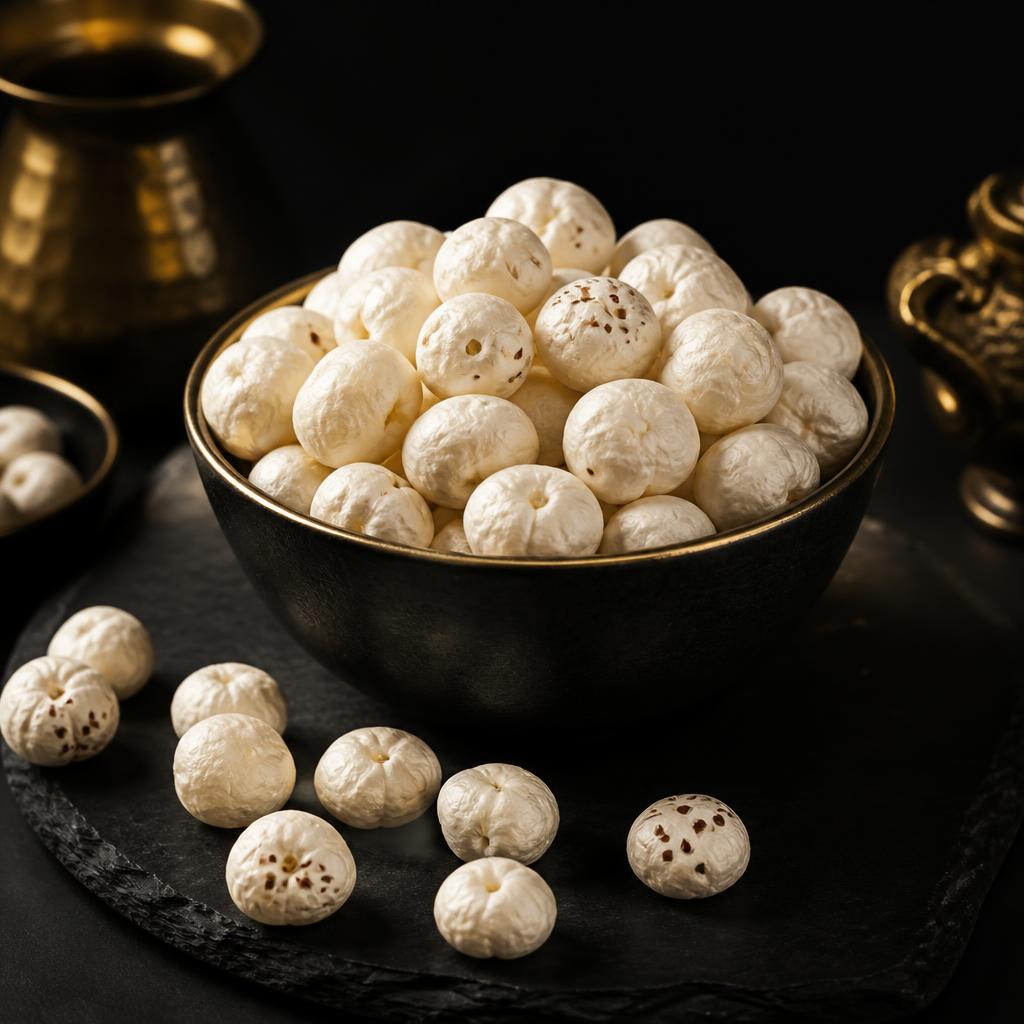
Most snacks come from a field. Makhana comes from a pond. That single difference explains why foxnuts are labour-intensive and why quality varies so much between lots.
It starts in shallow water
The prickly water lily grows in still, shallow ponds, mainly in Bihar and nearby regions of eastern India. Broad thorny leaves spread across the surface, and the seeds form underwater beneath them.
Once mature, the seeds sink to the pond bed, which is where harvesting begins.
Harvesting is done by hand
Farmers wade or dive into the pond and collect the seeds from the muddy bed using simple hand tools. The seeds are then washed, sorted by size and sun-dried.
There is no mechanised shortcut for most of this stage, which is why makhana is more expensive than field-grown snacks.
Roasting and popping
Dried seeds are heated in a pan until the hard black shell cracks. A quick tap releases the white kernel inside, which puffs out — that pop is what turns a seed into makhana.
The popped kernels are then cleaned and graded. Larger, rounder, whiter kernels go into premium grades; smaller and broken pieces are separated out.
What this means when you buy
Because every step depends on careful handling, consistency is the real mark of good makhana. Uniform size, clean white colour and very few broken pieces tell you the lot was sorted properly.
That is the standard we hold our makhana range to, whether it is going to a household kitchen or a wholesale carton.
Looking to buy makhana?
Browse our makhana range or the full product list. For shops, distributors and repeat supply, see bulk & wholesale orders.
Products mentioned
Bright white raw fox nuts in the popular 4+ size grade.
Price on Enquiry
Extra-large 5+ grade raw makhana with a premium appearance.
Price on Enquiry